Showing posts with label Director. Show all posts
Showing posts with label Director. Show all posts
Friday, 24 July 2015

Friday, 27 March 2015
Wan Ren (Director)
aka Wan Jen. Born: 1950, Taiwan.
Wan is perhaps the most explicitly political and the least auteurist of the New Cinema directors. Political, because Wan directly exposes social problems and, hence, has constantly run into trouble with censorship. Because Wan’s work crosses a wide range of topics, genres, and styles, he cannot be easily accommodated within the auteur pattern.
He made the 'Taste of Apples' segment of the foundational New Cinema film The Sandwich Man, which had created some controversy. After making the family melodrama Ah Fei (You ma cai zi, 1983), Wan, with his third film Super Citizen (Chaoji shimin, 1985), again faced state censorship. Super Citizen begins with a young man in search of his missing sister in the capital. In his relentless search, the man from the country encounters characters living on the fringes of the city—a con artist, a prostitute, a punk girl, and a lunatic bum. The film thus unfolds a decoupage of poverty, corruption, crime, and disillusionment with modern development and urban prosperity. The brother never finds his sister, but he decides to stay in Taipei in the end. By following his sister’s path, he, too, is engulfed by the metropolis’s black, underground economy. Motifs of “search” and “rescue” remind us of the famous captivity narratives in John Ford’s The Searchers and Martin Scorsese’s Taxi Driver, and perhaps even Lino Brocka's Manila in the Claws of Light.
Like Wang Tong, Wan chose a middle-way approach in making his films palatable to local audiences. Other new directors failed the high expectations of producers and exhibitors in their second or third films. Hou Hsiao-hsien’s The Boys from Fengkuei (1983) and Summer at Grandpa’s (1984), Edward Yang’s embarrassing 1984 box office flop Taipei Story, and Zeng Zhuangxiang’s Nature Is Quite Beautiful (Wu li de disheng, 1984) were all major disappointments. In comparison, Wan’s Ah Fei and Super Citizen both achieved modest commercial success. According to Wan, his approach in the New Cinema was different from the main paradigm. Beginning with 'The Taste of Apples', he wanted to make films that were accessible to the audience but at the same time allowed him to make strong social commentary.
Super Citizen was a joint production by Long Shong and New Cinema City’s Taipei office, chaired by none other than John Woo. Woo was not only the film’s executive producer, he also edited the trailer for the film. Certainly this Hong Kong connection meant Wan no longer could stay on the middle ground. He was expected to follow suit behind the Hong Kong New Wave and transform elements of Taiwan New Cinema into more commercial ingredients. Wan Ren was not fully ready for this. Problems arose when Tsui Hark produced his next film, 'The Farewell Coast' (Xibie hai’an, 1987). Wan intended to maintain his critical edge and, as a sequel to Super Citizen, wanted to make another topical film about youth crime. Meanwhile, Tsui wanted to push for a Taiwan version of A Better Tomorrow, an action thriller about the most wanted gunman on the island. Tsui hoped to add more gunfights to sensationalize Wan’s cool depictions of the teenager-cum-fugitive. Wan refused to reshoot and insisted on making the film as a social exposé rather than a pure genre picture.
Wan is perhaps the most explicitly political and the least auteurist of the New Cinema directors. Political, because Wan directly exposes social problems and, hence, has constantly run into trouble with censorship. Because Wan’s work crosses a wide range of topics, genres, and styles, he cannot be easily accommodated within the auteur pattern.
He made the 'Taste of Apples' segment of the foundational New Cinema film The Sandwich Man, which had created some controversy. After making the family melodrama Ah Fei (You ma cai zi, 1983), Wan, with his third film Super Citizen (Chaoji shimin, 1985), again faced state censorship. Super Citizen begins with a young man in search of his missing sister in the capital. In his relentless search, the man from the country encounters characters living on the fringes of the city—a con artist, a prostitute, a punk girl, and a lunatic bum. The film thus unfolds a decoupage of poverty, corruption, crime, and disillusionment with modern development and urban prosperity. The brother never finds his sister, but he decides to stay in Taipei in the end. By following his sister’s path, he, too, is engulfed by the metropolis’s black, underground economy. Motifs of “search” and “rescue” remind us of the famous captivity narratives in John Ford’s The Searchers and Martin Scorsese’s Taxi Driver, and perhaps even Lino Brocka's Manila in the Claws of Light.
Like Wang Tong, Wan chose a middle-way approach in making his films palatable to local audiences. Other new directors failed the high expectations of producers and exhibitors in their second or third films. Hou Hsiao-hsien’s The Boys from Fengkuei (1983) and Summer at Grandpa’s (1984), Edward Yang’s embarrassing 1984 box office flop Taipei Story, and Zeng Zhuangxiang’s Nature Is Quite Beautiful (Wu li de disheng, 1984) were all major disappointments. In comparison, Wan’s Ah Fei and Super Citizen both achieved modest commercial success. According to Wan, his approach in the New Cinema was different from the main paradigm. Beginning with 'The Taste of Apples', he wanted to make films that were accessible to the audience but at the same time allowed him to make strong social commentary.
Super Citizen was a joint production by Long Shong and New Cinema City’s Taipei office, chaired by none other than John Woo. Woo was not only the film’s executive producer, he also edited the trailer for the film. Certainly this Hong Kong connection meant Wan no longer could stay on the middle ground. He was expected to follow suit behind the Hong Kong New Wave and transform elements of Taiwan New Cinema into more commercial ingredients. Wan Ren was not fully ready for this. Problems arose when Tsui Hark produced his next film, 'The Farewell Coast' (Xibie hai’an, 1987). Wan intended to maintain his critical edge and, as a sequel to Super Citizen, wanted to make another topical film about youth crime. Meanwhile, Tsui wanted to push for a Taiwan version of A Better Tomorrow, an action thriller about the most wanted gunman on the island. Tsui hoped to add more gunfights to sensationalize Wan’s cool depictions of the teenager-cum-fugitive. Wan refused to reshoot and insisted on making the film as a social exposé rather than a pure genre picture.
Thursday, 26 March 2015
Wang Tung (Director)
 Born: 1942, China.
Director, and initially an art director/set designer.
Upon graduation from the National College of Arts in the mid-1960s, Wang entered CMPC as a set designer, drawing models, props, and costumes. Since then, he has worked with almost every major director, across many different genres and different styles. He was involved in more than one hundred films, including healthy realism, propaganda policy films, war epics, martial arts, kung fu, comedies, and Qiong Yao romantic melodramas. Wang worked with famous directors of the 1960s and 1970s such as King Hu, Li Hanxiang, Li Jia, Bai Jingrui, and Li Xing.
Wang was already a veteran when he joined the New Cinema. Well before Edward Yang, Wan Ren, or other new directors entered the trade, Wang had already established himself as a known director.
Like other New Cinema proponents, he re-invented popular genres by adding a nativist approach to them, starting from his first entry into the New Cinema canon, A Flower in the Rainy Night (which was not however his first film), based on a work by Huang Chunming, and continuing into his so-called 'nativist trilogy'.
A Flower in the Rainy Night was Wang’s entry into the New Cinema, and was shown at the 1983 Chicago International Film Festival where it won an award. It exemplifies Wang as an old school director in a new age, striving to balance the demands of studio affiliation and the emerging social consciousness of nativism. 'A Flower in the Rainy Night' was one of the most desired literary properties by many directors when the novel was first published in 1967, but its subject was considered taboo by the censorship standards of the era. It tells the story of an aging prostitute and her will to begin a new life by becoming a mother. The film outperformed other New Cinema films of the same year, like Growing Up and The Sandwich Man, with a box office record of NT$ 23 million (US$ 600,000) in Taipei alone.[Taiwan Treasure Island, 76] It was however dismissed by critical champions of the New Cinema as 'mediocre'.
Wang already had a liability because of his old school background. In addition, his ethnic and class background may have been another problem. For directors who want to work on nativist themes, their ethnicity and class matters. Born on the mainland, son of a KMT general, Wang had a comfortable, if not privileged, upbringing. This is well represented in Wang’s 1999 autobiographical film, The Red Persimmon (Hong shizi, CMPC). He grew up principally under the influence of his mother, a Chinese ink painter. This specific kind of mainland, Chinese upbringing would cast doubt on Wang Tong’s ability to sympathetically render local experience and expressions, essential to such a film as Flower in the Rainy Night.
His next film, 'Run Away', was a studio-ordered martial arts film, despite the fact he already had plans for a nativist comedy (Strawman which he would make in 1987). Wang thus never managed to fully become an auteur, remaining more of a studio journeyman director who alternated between studio-dictated projects, nativist films and more personal efforts.
'Strawman' would become the first of his 'nativist trilogy'. The story centres on peasants during the final days of World War II. Japanese military officers requisition all their valuables, crops, and animals. People are desperate for food as they watch the birds pick over their fields. Banana Paradise (Xiangjiao tiantang, 1989), and Hill of No Return (Wuyan de shanqiu, 1992) completed Wang Tong’s nativist trilogy. Wang’s preference for comedy may have prevented his trilogy from receiving sufficient critical attention, while it also lacks the formal rigour and invention of Hou and Yang.
Hou Hsiao-hsien’s trilogy focuses on extraordinary Taiwanese: artists, gangsters, leftist elites, and writers who were purged by right-wing regimes, both Japanese and KMT. Wang Tong, on the other hand, leans toward hungry farmers, disabled farmwives, foot soldiers, refugees, prostitutes, and deranged Japanese officers. Hou treats the issue of identity as a matter of conscience, of choosing sides; but in the final analysis he acknowledges the norm of Chinese nationality. Wang’s view of identity politics is more pragmatic and contingent; it is no less than a matter of food and lodging. To these wretched people, identity is simply a mechanism for survival.
When Shohei Imamura went to Taiwan to film parts of his wartime prostitute story Zegen (1987),
Wang was there to help as his art director.
Filmography (as director):
- A Flower in the Rainy Night (1983)
- Strawman (1987)
References/Resources:
Sunday, 8 March 2015
Chen Kunhou (Director/Industry)
 Born: Taiwan, 1939.
Director and cinematographer. As a former cinematographer at CMPC, Chen Kunhou is a transitional figure between the old school and initial steps taken in the New Cinema.
In the late 1970s, at Young Sun studios which was co-founded by his uncle, he began collaborating with Hou Hsiao-Hsien. This situation lasted until 1980 when Chen was given his chance to direct. But the collaboration between them remained. Hou would write scripts for Chen to direct and shoot while Chen would serve as Hou’s cinematographer when Hou directed. Chen was cinematographer for all Hou's early films, up to and including The Boys from Fengkuei.
As a director, and with Hou as writer, he had success with romantic comedies such as 'Spring in Autumn' (Tian liang hao ge qiu, 1980), 'I come with the wave' (Wo ta lang erlai, 1980), 'Bouncing sweetheart' (Beng beng yi chuan xin, 1981), 'Six Is Company' (Qia ru caidie fei fei fei, 1982).
Chen’s wide shots of rural landscapes present a shift from the standardized settings of the Qiong Yao melodrama to concrete, refreshing places. His long takes incorporate specific locations into the narrative and, as a result, enrich the visual connotations of an expected romance story.
Resources:
http://www.imdb.com/name/nm0155292/
Friday, 27 February 2015
King Hu (Director)
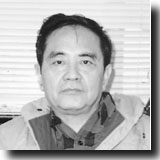 Born: 1932, Beijing. Died: 1997, Taipei.
Moved to Taiwan, from the Shaw Brothers production company in Hong Kong, where he was not on favourable terms.
It was King Hu who brought a new focus on a stylised kind of action in wuxia films, even introducing the credited role of “martial arts director” or fight choreographer as an official job description.
King Hu was from Beijing and incorporated many techniques from the capital’s opera stage. He too was a teacher of sorts, being an avid scholar of Ming dynasty literature, history, and the arts. Drawing on this knowledge, he injected period accuracy but, unlike his friend and mentor Li Hanxiang, accelerated the pace of movement and editing in action sequences.
King Hu’s martial arts style adds a large dose of athleticism in addition to grace. To make fight scenes look dynamic—fast, efficient, lethal—he used hidden springboards and trampolines to add power to combatants’ leaps. Wide-angle shots, swish pans, and rapid tracking are employed to enhance involvement with the total action, lending panoramic views to the surrounding space as well as the combatants. These are mixed with close-ups of only a few seconds, inserted to suggest the blinding impact of a body blow. He was also very dedicated to the historical accuracy of even the smallest details in his period productions.
King Hu was not really interested in kung fu or swordplay except insofar as it illuminates practices of Ming dynasty intrigue. Themes are equally classical, rendering but not dwelling on conflicts of good and evil, or the rigors of acquiring knowledge, intelligence, and (occasionally) enlightenment. The transcendent epiphany of Zen Buddhism is powerfully expressed at the end of A Touch of Zen, but this is an anomaly; the later pictures have the mystical, specifically Chinese atmosphere of Touch of Zen but lack the explicit visualization of religious power.
With the phenomenal success of Dragon Inn, Union Pictures and Hu signed up to do A Touch of Zen, and though Hu continued to work with Union, relations were increasingly strained. Hu was working at an unprecedented scale and expense on what would become his mystical epic A Touch of Zen. Continuing interference and nagging from Union producers prompted Hu to move postproduction on the film back to Hong Kong. From there, he eventually sent a director’s cut to Cannes, where he received a special award for technical achievement. The prestigious recognition—foreshadowed by Li Hanxiang’s Cannes prize for his Yang Kwei-fei (1962)—allowed Hu to earn an international reputation no other Chinese directors enjoyed. By then, King Hu had severed ties with Union and moved his production base back to Hong Kong. When he did return to Taiwan in the early 1980s, the films he made—The Juvenizer (Zhongshen dashi, 1981), All the King’s Men (Tianxia diyi, 1982), The Wheel of Life (Da lunhui, 1983)—no longer generated much impact or new sensations. King Hu’s historical archaism yielded to a different historical authenticity coming from the New Cinema movement.
Quotes:
"Some people say I come from the kung fu genre; that’s a mistake. I know nothing about kung fu. Action sequences in my films are neither kung fu nor martial arts, neither judo nor karate. In fact, they are just two fighters dueling, a form of dance. . . . Because I was exposed to Beijing opera when I was little, my action sequences are not real fights. They are “wuda,” [stage combat] in Beijing opera. There’s no such term as “kung fu” in the Beijing dialect. This is a Cantonese term used by Hong Kong people as a synonym for martial arts. In fact, Dragon Inn belongs to a kind of ancient Chinese espionage. It was made to respond to the prevalent James Bond 007 spy genre. The Ming dynasty is the era that has the strongest concentration of spies. They were controlled by eunuchs that were so powerful that they were immune from imperial authority. Dragon Inn is full of suspense and intrigue, and this is why it appealed to the audience."
Wednesday, 25 February 2015
Li Han-hsiang (Director)
Aka Li Hanxiang. Born: China 1926. Died: China, 1997.
Moved from the Hong Kong industry to work in Taiwan during the 1960s. Li cut ties with the Shaws and started up a new company in 1963. He entered a partnership with Union, the distributor of Shaw and Cathay films in Taiwan and founded Grand Pictures, whose Chinese name (Guolian) combined the first character of each partner: Cathay (Guotai) and Union (Lianban).
One of the films he made for the Shaw Brothers studio was The Magnificent Concubine (1962), a 'remake' or retelling of the same Chinese Tang dynasty story as Kenji Mizoguchi's 1955 colour film Yokihi (which had been co-produced by Shaws but had been a commercial failure).
Li’s ideal was to set up a studio with management made up of practicing filmmakers whose decision-making was collaborative rather than dictatorial. Collaborative meant that Grand, a “director-as-producer” company, allowed directors to have more say in production. It also meant that Li himself would direct fewer films (he only made six and a quarter films), to give new directors more opportunities.
In 1965 Li lost his two major backers. Cathay’s owner Lu Yuntao and Taiwan Studio’s director Long Fang were both killed in a mysterious air crash. By 1966, Li had woefully overspent in the new company’s first years, and Union refused to extend more credit. By 1967, Grand was in serious financial difficulties and broke off from Cathay and Union. Li quickly sought outside funding to maintain production and formed an alliance with another distribution company. Without Union’s powerful distribution network, and lacking the mighty financial backup from Cathay, Li was not able to sustain his quality production. By 1970, Grand Pictures ceased operations. It had made a total of just twenty-two films.
Moved from the Hong Kong industry to work in Taiwan during the 1960s. Li cut ties with the Shaws and started up a new company in 1963. He entered a partnership with Union, the distributor of Shaw and Cathay films in Taiwan and founded Grand Pictures, whose Chinese name (Guolian) combined the first character of each partner: Cathay (Guotai) and Union (Lianban).
One of the films he made for the Shaw Brothers studio was The Magnificent Concubine (1962), a 'remake' or retelling of the same Chinese Tang dynasty story as Kenji Mizoguchi's 1955 colour film Yokihi (which had been co-produced by Shaws but had been a commercial failure).
Li’s ideal was to set up a studio with management made up of practicing filmmakers whose decision-making was collaborative rather than dictatorial. Collaborative meant that Grand, a “director-as-producer” company, allowed directors to have more say in production. It also meant that Li himself would direct fewer films (he only made six and a quarter films), to give new directors more opportunities.
In 1965 Li lost his two major backers. Cathay’s owner Lu Yuntao and Taiwan Studio’s director Long Fang were both killed in a mysterious air crash. By 1966, Li had woefully overspent in the new company’s first years, and Union refused to extend more credit. By 1967, Grand was in serious financial difficulties and broke off from Cathay and Union. Li quickly sought outside funding to maintain production and formed an alliance with another distribution company. Without Union’s powerful distribution network, and lacking the mighty financial backup from Cathay, Li was not able to sustain his quality production. By 1970, Grand Pictures ceased operations. It had made a total of just twenty-two films.
Saturday, 21 February 2015
Bai Jingrui (Director)
 Born: China, 1931-1997.
Like Li Xing made contemporary dramas, in the 'healthy realism' and Qiong Yao adapted melodrama genres. Unlike Li Xing, he started out not in taiyu pian but in Mandarin language productions.
He went to study in Italy. After he returned to Taiwan, as the first Chinese graduate from Rome’s Centro Sperimentale di Cinematografia in 1963, he was hired by CMPC.
In his first feature, 'Lonely Seventeen' (1967), Bai intended to criticize the stifling lives of youth in the industrialized towns of Taiwan, but CMPC insisted it be a “socially responsible” film and, hence, the happy ending. Bai had to apply a “romantic” treatment to mask his social critique. Here is his complaint about this interference:
"Teenagers in our times are under a lot of stress—from the lack of parental care and rigid training in schools as well. They have to resort to fantasy to seek paradise. Hence all sorts of twisted psychology and weird behaviors. I was going to directly tackle this serious phenomenon but CMPC was afraid that the Communists would use it to attack our government. As an artist, I should have insisted on my original intention, but as a CMPC director, I also needed to understand my responsibility. So I changed the story quite a bit and turned it into a romantic film. Anyone can see that this film has no business being a romance story! No matter how well it has been received, I am not happy with it at all." [From Taiwan a Treasure Island]
He turned to comedy in the immediate years after this. Then later would make 'healthy realism' but with his own touches of modernism and experimentation, e.g. the split-screen techniques in the multi-strand plot of 'Home Sweet Home'. But the messages of filial piety in his films often feel tacked on, a coda inconsistent with the narrative and stylistic excess that dominates the film.
Between 1974 and 1979, an unprecedented boom for Taiwan popular cinema, Bai made a total of eighteen films. Sixteen of these films are romantic melodramas. By the early 1980s, when romance could no longer sustain the industry, Bai Jingrui tried to reinvent his career with the support of Hong Kong–based First Film Enterprise. He made an anti-Communist film, The Coldest Winter in Peking (Huangtian houtu, 1981), which was banned, expectedly, by the Hong Kong government for endangering its “friendly relations with neighboring countries.” In following years Bai appeared to run out of ideas and blindly followed the current fashions (including trying to mimic the style of the New Taiwan Cinema).
Wednesday, 18 February 2015
Li Xing (Director)
Born: 1930, Shanghai.
Grew up in Shanghai before moving with his family to Taiwan after the war. His first Mandarin film was Our Neighbours (Jietou xiangwei, 1963), a 'realist' portrait of an impoverished Taipei neighbourhood. He also made the influential 'healthy realism' films Oyster Girl (1964) and Beautiful Duckling (1965).
Before this he had made Taiwanese (taiyu pian) films including comedy serials. Precisely because of its low budgets, Taiwanese film production was in urgent need of new directors, even if
they had little or no experience. This was how Li got into directing in 1958, although he never went back to this after making the move to the larger Mandarin-language film industry in 1963. He thus worked across the various genre and linguistic and industrial divides in Taiwan, and is a key figure of pre-1980s Taiwanese cinema.
Li is known for his filial piety. He openly acknowledged that parental love supersedes any other kind of relationship in his world. This explains the centrality of the father/son duo in many of his films.
Criticism arises when Li’s auteur signature becomes “backward,” when his traditional values appear to obstruct any possibility for “social and cultural reform.”
Parallel to his lifelong relationship with CMPC, Li continued to make films for himself and for other small independent companies. For instance, Li also made films for Union Pictures and codirected an omnibus film with Li Hanxiang, King Hu, and Bai Jingrui for Grand Pictures in 1969. This film, in which each emotion is treated by a different director, is called 'Four Moods'.
In 1973 and 1974, Li became the number one box office director in Taiwan and Hong Kong with his two hits, The Young Ones (Caiyun fei, 1973) and Where the Seagull Flies (Hai’ou fei chu, 1974). Both were based on Qiong Yao novels. These melodramas not only established him as a ruling commercial director, they also helped mark the peak of Taiwan film’s so-called Golden Age (when Taiwan films were popular enough to get advance financing from around Southeast Asia). Romantic melodramas, dominated by Qiong Yao adaptations, comedies, and martial arts films made up the core that supported a flourishing industry.
References:
Taiwan Film Directors: A Treasure Island, 30-.
http://www.imdb.com/name/nm0497359/
Grew up in Shanghai before moving with his family to Taiwan after the war. His first Mandarin film was Our Neighbours (Jietou xiangwei, 1963), a 'realist' portrait of an impoverished Taipei neighbourhood. He also made the influential 'healthy realism' films Oyster Girl (1964) and Beautiful Duckling (1965).
Before this he had made Taiwanese (taiyu pian) films including comedy serials. Precisely because of its low budgets, Taiwanese film production was in urgent need of new directors, even if
they had little or no experience. This was how Li got into directing in 1958, although he never went back to this after making the move to the larger Mandarin-language film industry in 1963. He thus worked across the various genre and linguistic and industrial divides in Taiwan, and is a key figure of pre-1980s Taiwanese cinema.
Li is known for his filial piety. He openly acknowledged that parental love supersedes any other kind of relationship in his world. This explains the centrality of the father/son duo in many of his films.
Criticism arises when Li’s auteur signature becomes “backward,” when his traditional values appear to obstruct any possibility for “social and cultural reform.”
Parallel to his lifelong relationship with CMPC, Li continued to make films for himself and for other small independent companies. For instance, Li also made films for Union Pictures and codirected an omnibus film with Li Hanxiang, King Hu, and Bai Jingrui for Grand Pictures in 1969. This film, in which each emotion is treated by a different director, is called 'Four Moods'.
In 1973 and 1974, Li became the number one box office director in Taiwan and Hong Kong with his two hits, The Young Ones (Caiyun fei, 1973) and Where the Seagull Flies (Hai’ou fei chu, 1974). Both were based on Qiong Yao novels. These melodramas not only established him as a ruling commercial director, they also helped mark the peak of Taiwan film’s so-called Golden Age (when Taiwan films were popular enough to get advance financing from around Southeast Asia). Romantic melodramas, dominated by Qiong Yao adaptations, comedies, and martial arts films made up the core that supported a flourishing industry.
References:
Taiwan Film Directors: A Treasure Island, 30-.
http://www.imdb.com/name/nm0497359/
Monday, 18 August 2014
Edward Yang (Director)
 (Yang Dechang). Born: 1947, Shanghai. Died: 2007, Los Angeles.
 His family was originally from Guangdong province and relocated to Taiwan (like many others) in 1949. He graduated in engineering in Taiwan in 1969, before getting an MA degree in computer science in 1972 from the University of Florida. In 1974, he briefly enrolled to study film at the University of Southern California, but quit after a year. He worked in the computer industry in the US for the next few years, before returning to Taiwan in 1981. There he would initially get his break (in a very young under-productive film industry in the process of re-inventing itself) first directing a TV show episode and then a segment in an omnibus film, In Our Time.
"He was a self-taught filmmaker, an engineer-cum-comic book
illustrator, not a director with an orthodox training in the craft. He is a cinephile,
with impeccable taste in European and American cinema. Inspired by the example
of Werner Herzog, who used the money earned as a blacksmith to hand-make his
own early features, Yang embarked on the same road. But his commitment to
film is part of a wide-ranging aesthetic sensibility that is more mathematical than
expressive. Yang idolizes architects (I. M. Pei), musicians (Beethoven, Bob Dylan),
and scientists (Einstein), not only artists and filmmakers." [Taiwan Treasure Island, 92.]
Had an antagonistic relationship with the domestic Taiwanese film industry, and many of his films, especially all his later ones, were never released domestically [find out more on this].
Yang in fact had trouble negotiating the commercial practices of Taiwan’s film industry from the beginning. From his first feature That Day, on the Beach, he found it hard to work with the crew assigned him by Central Motion Picture Corporation (CMPC), and this drove him away from commercial production.
"From virgin to vamp, from innocence to experience, Yang’s women are emblems for socioeconomic transformations, the exchange of qing for economic gain and rapid replacement of old with new. The intertwined stories of two women in That Day, on the Beach masks the consequences of the economic boom in postwar Taiwan—selling out qing for money. Yang uses the two women to suggest that women are adaptable, and men are more vulnerable, to change. Men appear to be socioeconomic achievers, but they are the ones to bear the costs of competitive pressure.... The women in Yang’s films cast about for a suitable feminine role to play, often wracked by indecision. Their angst and neurosis is nothing, though, next to the profound identity crises of males, particularly those negotiating rites of manhood." [Taiwan Treasure Island, 123-4]
"Missing persons are a common thread in all Yang’s films, and their absence is connected to a loss of capital and confidence, both financial and emotional (qing). Yang’s narratives are all based on the resolution of a puzzle. Each story begins with a misplaced piece, nearly always taking the form of the missing. That Day, on the Beach opens with the search for the disappeared husband; the vanishing Ms. Mei in Taipei Story uncovers the deficits of the major characters Chin and Ah-Lon. Nobody actually goes missing in The Terrorizers, but the whole film is based on deferral, displacement, and waiting. Honey is the missing person in A Brighter Summer Day, hiding somewhere in the South. During his absence, struggles for power and women break out in the gangs of Guling Street. But when he returns, he is murdered instead of restoring order. In Mahjong, a kidnapping is used to locate the missing father of Redfish, who returns, only to kill himself and his mistress. Similarly, the grandmother in Yi Yi returns to life after her long coma, then dies, bringing the family together again."
Themes & Motifs:
- .
- Absent/weak fathers (also seen in Hou, and related perhaps to the 'fraudulent' father-figure of the nation, Chiang Kai-Shek.
Filmography
- In Our Time (1982, joint-director)
- That Day, on the Beach (1983)
- Taipei Story (1985)
- The Terroriser (1986)
- A Brighter Summer Day (1991)
- A Confucian Confusion (1994)
- Mahjong (1996)
- Yi Yi (2000)
Jameson in New Chinese Cinemas, 117-.
Profile in Perspectives on Chinese Cinema, 199.
Hou Hsiao-Hsien (Director)
 Born 1947, Meizhou (Guangdong Province), China.
His family, who were of the Hakka ethnicity, moved to Taiwan in 1949, settling near Kaohsiung. After graduating in 1972 from the film department of the Taiwan National Academy of Arts, (he worked for a while as calculator salesman and then...) he entered the film industry the following year, initially working as production assistant and assistant for several established directors. He also wrote scripts during this time. His early film Green Green Grass of Home (1982) established much of his concerns and traits: it had a rural setting and children protagonists, much like most of his 1980s output.
Entry into the film industry:
Hou entered the industry in 1972 as the apprentice of Lai Chengying, a longtime cinematographer for Li Xing. “Lai san” (Japanese meaning “Mr. Lai,” as Hou respectfully addressed his master) was a prolific cinematographer in the 1960s and ’70s. Lai was responsible for the photography of many Taiwan classics, including the 1965 healthy realist Beautiful Duckling and a number of famous Qiong Yao romantic melodramas. Hou was brought in to work as a continuity keeper on Li Xing’s 1973 romantic melodrama, Heart with a Million Knots (Xin you qianqian jie), a Hong Kong and Taiwan coproduction meant to cash in on the huge success of Li’s earlier hits. As an apprentice to the film industry, Hou’s major task in his formative period was to learn various genre conventions in order to assist his teachers and seniors. In 1975, Hou was promoted to assistant director and followed his teacher Lai Chengying to Young Sun (Yongsheng), a distribution and producing company. Hou continued to work as Lai’s assistant director and scriptwriter. It was during this period that Hou established a collaborative relationship with Chen Kunhou, Lai’s nephew and Young Sun’s in-house cinematographer. In the next five years, Hou worked on ten films directed by Lai and collaborated with Chen on several romantic comedies.
Also met Liao Ching-sung during those years, who would edit his every feature to the present day. Interview with Liao with Suchenski in his book, reveals a lot about influence of Chinese poetry, and Taoist thought, on the editing and transitions of Hou's films.
Then he was given an opportunity to direct and write, with Chen Kunhou as cinematographer, three films in the following two years. The first two films, Cute Girl (aka Lovable You, Jiushi liu liu de ta, 1980) and Cheerful Wind (aka Play While You Play, Feng’er ti ta cai, 1981), are somewhat like “package films” in terms of making them as double bills based on one premise. Cute Girl and Cheerful Wind share identical casting; their stories are comparable; their narrative structure and visual-audio style and even comic gags are almost indistinguishable. Both films cast Canto pop singer Kenny Bee (Zhong Zhentao) and Taiwan pop icon Feng Feifei. The surplus value of casting pop idols is to fill the soundtrack with many popular songs by the two leads. This was a standard practice in romantic melodrama in the 1970s, a symbiotic, cross-media cooperation between the recording and film industries. Pop singers plus comic features granted Hou a hot ticket to the rather closed film distribution network. These two films were released for consecutive Chinese New Year holidays, traditionally the most profitable period of the year for the movie business. With these two films, Hou was able to establish himself as an A-list commercial director.
Cute Girl (1980): Hou’s first feature exemplifies seizure of opportunities for renewal, as well as maintaining continuity with a popular tradition. Youth subject matter, family ethics, the Taiwanese countryside, popular music, and low humor commingle in an appealing mixture of romance and comedy. Hou capitalizes on the “Taiwanese” quality of Feng Feifei, a Taiwan girl popular with Taiwan natives through her songs and television work. Using popular music and television, Hou took previous forms in a new direction away from the sentimental, literary quality of the film melodramas of the 1970s. Audiences appreciated the new emphasis, at once lighter and more topical. Cute Girl may seem a long way from Hou’s mature works. However, two themes reappear later in different forms. They are the contrast between competitive city and communal countryside, and an important aspect of the modern Taiwanese family, namely, that a seemingly rigid kinship can actually be malleable, with some ingenuity, sincerity, and good humour.
Cheerful Wind (1981): Hou’s second film, with the same two stars, is a clever romantic comedy released for the Lunar New Year. Like Cute Girl, its charm is so effortless that the artfulness is easily overlooked. If it seems like commercial fluff, Cheerful Wind has much unexpected richness. The opening scenes that take place on the P’eng-hu Islands (Pescadores) take great liberties with generic and thematic expectations. (Note the fiction within fiction beginning where it is only revealed after a while that the kids trying to set off a firecracker are in fact acting for a washing powder commercial, when the camera moves to reveal the film crew.) When the story moves to Taipei after the first thirty minutes, it settles into a more conventional moralistic musical comedy. The structure is a reverse of Cute Girl in that it begins in the rural setting and then moves to Taipei in the middle section. But in both films Hou already gives the impression of being more interested in filming the rural locations, the specific tempo of that setting, the mischievous kids, the trees, etc. Movement and distance also emerge as themes in both these films. Overall though, it is perhaps more useful to see these films as part of the continuing learning curve of Hou, as an empirical filmmaker rather than a theoretical one, who learnt on the job, making the most of his increasing industry experience and natural instinct to solve whatever problems were encountered.
Both films are in widescreen, with frequent zooms and pop songs to show off their stars' talents.
In 1982, Hou directed The Green, Green Grass of Home, the film believed to have been a spark for the commercial director to defect to art cinema in the approaching New Cinema movement.
"It was while working with a child actor during the production of The Green, Green Grass of Home (1983) that he first allowed his actors to improvise their dialogue, a practice he continues today. This method has enabled Hou to coax more naturalistic performances out of professional and nonprofessionals alike, and it has subsequently had far-reaching effects on Hou's filmmaking as a whole, demanding longer takes to allow for cohesion in the actors' work. And it is this practice, among others, that aligned Hou's style (however inadvertently) with a kind of international neorealist movement and defined it in opposition to his commercial contemporaries in the moribund, constrictive Taiwanese film industry of the early and mid-1980s"
In 1983 he collaborated on the omnibus film The Sandwich Man, where his segment is typically considered the most impressive (just like Edward Yang's in In Our Time made one year before).
"His "country" films do not simply evoke bucolic nostalgia; they are about the intersection of the rural and the urban (or the past and the future) in modern Taiwanese life. In both The Boys from Fengkuei and A Summer at Grandpa's, the dichotomies of past/future or of country/city are not quite opposed or contentious, rather they are in dialogue, and this dialogue is part of a broader debate about Taiwan's modernization"
In 1988, he was voted by World Critics at the New York Film Festival as one of three directors likely to shape the future of cinema in the decades to come.
Literary influences: The influence of Shen Congwen, the famous 20th century mainland Chinese writer (recommended to him in the early 1980s by Chu Tien-wen, see quote below), had some impact in his incorporating the concept of 'distance', 'objectivity' and observing/relating his story and characters with some form of dispassion. The long take/long-shot aesthetic may partly have stemmed from the artistic breakthrough Hou achieved in discovering Shen Congwen.
His films are sometimes regarded as a cinematic equivalent of the literary 'roots literature' movement which expressed a nativist Taiwanese sentiment and addressed issues of Taiwanese cultural identity.
Style:
- Long-take long-shot aesthetic. Often static camera but not always. Preference for flat frontal shots as opposed to angled ones.
- When The Puppetmaster competed at the 1994 Cannes festival, Hou came out openly about his propensity for Eastern / Oriental aesthetics, particularly in his use of liubai as a key narrative strategy in The Puppetmaster. Liubai, leaving space blank, is a common compositional device in traditional Chinese ink painting to prompt emotional contemplation. In cinema, liubai entails inviting audiences into a cinematic space, not to understand, connecting cause and effect, but to experience: in other words, an aesthetic of deliberation. Thus, spatiality is emphasized to privilege aura, ambiance, and mood, leaving temporal markers as mere footnotes. Ellipses, elimination of a significant portion of plot, are likened to the traditional compositional principle in which a small section is believed to be more revealing than a totality.
- "Before making Fengkuei my ideas about cinema were rather simple: narrative, to tell the story in the script. Later on I met some filmmakers who had returned to Taiwan from abroad. They had a lot of theories about cinema, which got me all confused. I was puzzled; the script was ready but I didn’t know how to give it form. After listening to me, my scriptwriter Zhu Tianwen showed me a book called Autobiography of Shen Congwen. After reading the book I discovered Shen’s point of view was somewhat like looking down from above. Like natural laws, it has no joy and no sorrow. That I found to be very close to me. It doesn’t matter if he’s describing a brutal military crackdown or various kinds of death; life to him is a river, which flows and flows but is without sorrow or joy. The result is a certain breadth of mind, or a certain perspective that is very moving. Because of this, it produces a generosity of viewpoint. I decided to adopt this angle. The problem was how to transplant it to film. I didn’t really have a solution but I discovered a simple device, and that was to constantly tell the cinematographer to “keep a distance, and be cooler.” It allowed certain real situations to naturally unfold themselves. The camera just stayed at a distance and quietly watched over them." [p158, Taiwan Treasure Island]
- Hou's films/scenes have been described as always 'in media res', present-tense, always in the present moment (hence comparisons with Pialat by French critics) and his rendering of time/the present as something perpetually vanishing (one writer described his style as 'writing in water'). His style prioritises unmitigated experience of the moment over narrative development (he prefers filming/showing over storytelling/plot-development, which however belies the careful structure of his screenplays), which is part of his attitude to dealing with time in his films. (Also the way he deals with history, macro-history happening in the background of micro-history, the characters he focuses on are living in the moment, e.g. the family in A City of Sadness, without always being aware of the greater historical narrative they are caught in, which is only clearer to us from a more distant vantage point in time.)
- Hou is particularly praised for having found a way in his style, content, formal and aesthetic sensibility to have remained both anchored in a culturally 'Chinese' tradition while also looking forward, innovating, and bringing modernity via a non-Chinese artform and medium to these traditions. Thereby he is both traditional and modern, not simply rehashing Chinese cultural artefacts nor aping Western cinema, but has brought about a productive symbiosis of the two.
Themes & Motifs:
- Taiwanese identity.
- Taiwanese history
- Personal memory
- The family unit
- Meals and banquets
- City vs Rural (migration, displacement)
- Trees, rural settings
- Highly elliptical narrative structure encouraging active/attentive viewership
- 'Master shot' aesthetic (long take, long shot)
- Static camera until 1993, mobile thereafter
- Very dense mise-en-scene
- Blocking and frame-within-frame compositions
- 'Iterated framings'
- Trains
- Travelling shots
Notes:
Hou was an auto-didact who made it into the film industry half by chance, after a misspent youth that could have ended, like many of his friends did, in a life of petty crime and hoodlum gangsterism. His natural talent and instinct are therefore to be reckoned with, but as Chu Tienwen remarks it is his ability to cultivate this natural instinct and continually develop it by looking for new directions/horizons which has made him the master filmmaker he is.
"...an oeuvre whose towering subject has been the entanglements of Taiwanese nationality and Chinese identity".
[personal memory]... It is important that Hou grew up in the countryside, and in the era before Taiwan's economic boom and the mass exodus to the cities which followed. From at least as early as Green Green Grass of Home, Hou begins inserting his personal and most deeply felt memories into his film, that is of a rural upbringing. This must also explain his particular affinity for the rural scenes in his first 3 films. But throughout his 1980s work, shots of trees, trains, fields, family gatherings around a table, etc all abound in his films, and are to his own admission inspired by his own memories of where he grew up and the sense of community that existed there. Of course, A Time to Live, A Time to Die represents the culmination of this approach of mining his own memory. (One can also remember the mango-tree childhood anecdote he told Assayas as an early formative memory which may partly have inspired his distanced objective cinematic outlook)
[approach to history/time]... his films convey a "sense of what it feels like to be a human being dwarfed and engulfed by time, and his passionate enactment of the ways people (not just individuals, but families, nations) navigate the quicksand of history."
A filmmaker of restraint rather than excess, and also one without an agenda or message to be droned into the audience (his films may be read as political but on a less obvious level, e.g. giving voice to aspects of Taiwanese culture and history previously taboo)... also non-judgmental, quotes Confucius maxim: "Observe and do not judge", which seems to stand for his formal/visual aesthetic as well as his attitude to characters. The beautiful paradox is that through this holding back, he makes us feel all the more a powerful emotion for his characters.
The sense of an austere, economic style that passes no judgment but simply records what happens, ..... Placing characters in a larger context does not heighten our awareness of forces working upon them so much as suggest the power of forces working beyond them. It produces a sense of remove without a corresponding sense of indifference.....
Inferential storytelling? (demands active engagement from audience, e.g. Dust in the Wind)
[Reception] "But all this neatly gift-wrapped unity of form and content has left Hou a little slippery, and his entry into art-house prominence here in the U.S. has been overshadowed somewhat by a long-running and rich film festival circuit mythology. Most who care to know had read about Hou long before they’d seen a frame he’d shot, and the near simultaneous availability of a bunch of his works here on DVD in 2001 and 2002 coupled with retrospectives and critical hosannas created a breathlessly rarified situation in which his films, especially the Nineties works, may have become more intriguing as objects to witness and admire than art to examine. Non-traveling cinephiles weren’t given the chance to grow with the artist, understand, say, how the weight of City of Sadness contributed to the several-year break between it and its follow-up, The Puppetmaster. The relative dearth of knowledge most western viewers possess about Taiwan coupled with his lush visual schemas only helped further exoticize his filmmaking."
Filmography:
- Cute Girl (Loveable You, 1980)
- Cheerful Wind (1981)
- The Green Green Grass of Home (1982)
- The Sandwich Man (1983)
- The Boys from Fengkuei
- A Summer at Grandpa's
- A Time to Live, a Time to Die
- Dust in the Wind
- Daughter of the Nile
- A City of Sadness
- The Puppetmaster
- Good Men, Good Women
- Goodbye South, Goodbye
- Flowers of Shanghai
- Millenium Mambo
- Cafe Lumiere
- Three Times
- Flight of the Red Balloon
- The Assassin
References:
Profile in Perspectives on Chinese Cinema, 189.
Chapter in Taiwan a Treasure Island
Hou Hsiao-hsien (JM Frodon ed.)
http://www.taiwancinema.com/fp_12434_136
https://www.theguardian.com/culture/2000/aug/03/artsfeatures1 (comparison with S Ray)
Subscribe to:
Posts (Atom)